Avery Coonley’s Fall 2025 Music Club
— Overture Games•Lead Teacher: Tommy Shermulis
When the Dragons Showed Up
Week One: The Muse Cash Incident
Eight kids. Eight tablets. And one kid who figured out how to break the economy on day one.
"He just kept spam-buying packs," Tim laughed. "Never ran out of money. I had to just... let it happen and make a note for the developers."
Welcome to Overture Club, where the first lesson is always the same: yes, the tablets are exciting. No, you can't keep playing when it's time for the next activity. It's a battle every teacher knows, but Tim was ready for it.
"Having to ask the kiddos to put the devices down is always something they struggle with," he admitted in his first week notes. But here's the thing—by week four, they were doing it themselves.
That's not about tablets. That's about learning when enough is enough, even when you're having fun. And honestly? A lot of adults still haven't figured that out.
Week Three: When the Games Got Hard
Then came the difficult week. Yeet the School introduced a "catching the scoop" mechanic that kids STRUGGLED with. Tim found himself running from kid to kid, trying to help each one figure it out.
The Major/Minor scale tower game was even worse. These are young kids—some musical, some not. If you don't already understand how scales work, you're basically just guessing.
"The game loses much of its substance," Tim wrote, clearly frustrated. "It quickly turns into a guessing game."
He gave that session a 4 out of 10 as formative feedback.
But here's what matters: he didn't just push through and pretend it went great. He stopped, thought about it, and wrote down exactly what needed to change. That's a teacher who actually cares whether kids are learning or just clicking buttons.
His suggestion? Slow down. Spread this content over two weeks instead of one. Make sure everyone actually understands what a scale IS before asking them to build one in a game.
Week Five: The Instrument Show-and-Tell Nobody Planned
October 29th. The school's computer sign-in system went down.
Tommy Shermulis showed up expecting a normal class and couldn't get into the building. No sign-in system. Eventually they handed him a visitor pass and he scrambled to figure out what to do.
But the internet still worked, so he grabbed his percussion instruments and pivoted.
Then something unexpected happened.
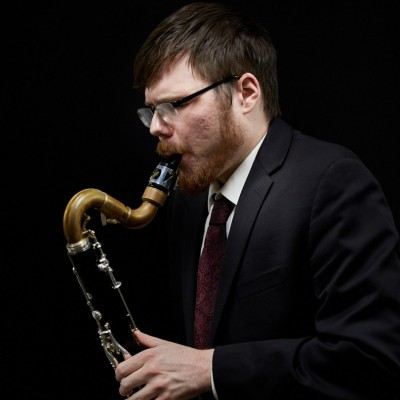
"I learned a few of them had their instruments and wanted to show them," Tommy wrote. "I had a kid show off his cello, and another kid show off his oboe. I had my bass clarinet, so I showed them that too."
The lesson plan went out the window. Instead, they just... played. A cello. An oboe. A bass clarinet. Kids showing each other what they could do.
"They really enjoyed that," Tommy said—which might be the understatement of the semester.
This is the kind of moment you can't plan. It only happens when a teacher is paying attention and willing to let go of the script.
Week Six: "These Kids Already Know Everything"
The next week, Tommy came back with a proper lesson on dynamics and instrument families.
"The kids at Avery Coonley are all very well educated in music already, and are surpassing expectations greatly," he wrote. He talked about how clarinets use one reed, how pianos use hammers and strings. "Surprisingly, these kids already knew a lot."
So he went deeper. They did an instrument rocket race. They talked about which families instruments belong to and why.
But then came Flappy Muse—a game where you control pitch with your voice. The kids thought the height of the character meant pitch, not dynamics (volume). So they started shrieking at the highest pitches they could possibly make.
Tommy had to stop everything and explain: "No, this is about loud and soft, not high and low."
Also, he learned that Flappy Muse is "not a single player game under any circumstance." Kids need to do it together or chaos ensues. Noted for next time.
Week Eight: The Day They Missed Mr. Tommy
November 19th. Maddie Anderson stepped in to teach a lesson on musical genres.
The kids were low energy. They missed Tommy.
"Students were pretty low energy today and they missed Mr. Tommy," Maddie wrote honestly. "Our dancing portion was not as exciting to many of them."
She'd planned to have them dance to different genres, but they were distracted by the YouTube videos on the smartboard. The Suno music generator wouldn't load—she waited 10 minutes, tried a simpler prompt, still nothing.
So she pivoted.
"We opted to spend more time imagining stories with our eyes closed," she wrote.
She had them close their eyes and just listen to music. Then she asked: what do you see?
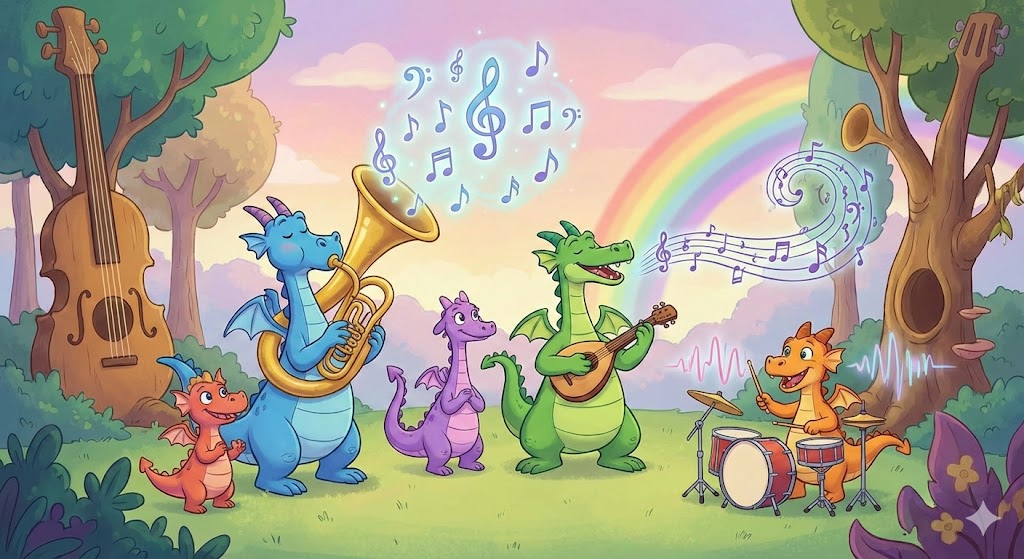
And that's when the dragons showed up.
"They came up with a lot of amazing ideas!" Maddie said. Dragons. Dancers. Whole adventures happening behind their eyelids.
It wasn't the lesson she planned. But sometimes the best moments come from the stuff that breaks.
What Actually Happened Here
By the end of the Overture club, these kids had:
- Learned to put down tablets when it was time (even when they didn't want to)
- Figured out rhythm patterns and harmony
- Brought in their own instruments to share
- Learned to use their inside voice dynamics
- Imagined dragons out of thin air
But more importantly, they learned from teachers who each showed them something different about music. Tommy taught them discipline and structure and how instruments actually work. Maddie taught them that music lives in your imagination.
"Overture Games is phenomenal in its creativity and engagement," Tim said. "Kids instantly recognize elements inspired by games like Pokémon and Minecraft."
But here's his real point, buried in week four feedback: what sets Overture apart isn't the games. It's whether every minute is "saturated with deep musical enrichment that levels up each child, regardless of where they are musically."
Some weeks hit that mark. Some weeks were chaotic. Some weeks the technology failed and they had to make up something on the spot.
That's teaching. That's learning. That's what actually happened in Overture every Thursday this fall.