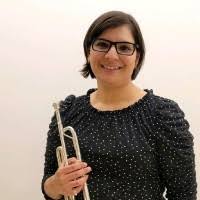
Lead Teacher
Amber Gillani
Frustration to "Can We Stay Longer?"
— Overture Games•Lead Teacher: Amber Gillani
Turning Frustrated Students Into Composers Who Say "Can We Stay Longer?"
Some teachers spend years trying to figure out how to get students excited about learning. Amber Gillani discovered the secret in her fall music class at Intercultural: let them create.
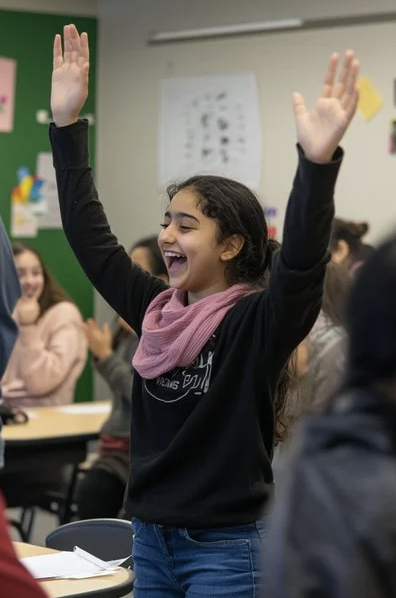
"Students wanted to keep playing extra, but I had to call time," she wrote after one particularly energetic session. "They were also enthusiastic about sharing their compositions."
This fall, Amber guided a dedicated group of young musicians through a journey of discovery, watching as struggling readers became confident composers and hesitant participants transformed into eager creators who didn't want class to end.
The Breakthrough That Changed Everything
Early in the semester, Amber faced a familiar teaching challenge. During the third week, while introducing harmony basics, students encountered "Yeet the Scoop," a game about building and serving chords to customers at an ice cream parlor. At first, it didn't click.
"Students were frustrated at first," Amber admitted.
But what happened next showcases why great teaching matters. Rather than move on or simplify, Amber took the time for individual check-ins and peer support. She demonstrated the game, played alongside students, and most importantly, connected the abstract concept to something tangible by playing the chords they created on a real keyboard.
The result? It "turned it into some students' favorite game! (That's new!)"
That transformation from frustration to favorite showed students realizing they could create something real, something they could hear and share. When Amber recapped the purpose of the game and played the chords they scooped on the keyboard, she gave them proof that their work mattered.
The Day Creativity Won
By October, students were begging for more creation time.
"Students really want to create, it's helpful to have the specific creation-based games," Amber observed.
She noticed how Piano Clicker's new record option made it "a much more effective and useful game," and watched as students got "excited to share their creations." Then came the moment every teacher dreams of: "I had students specifically ask what would happen if I changed it from Major to minor (win!)."
Those students weren't asking because they had to. They were genuinely curious. They wanted to understand how their creative choices would change the music they were making. That's the difference between compliance and engagement, between following instructions and becoming a musician.
Amber also noted something wonderful: "They also really want to make their own muses." The students wanted to imagine and design their own musical characters. So Amber gave them time to do exactly that, because she understood that ownership fuels learning.
When Things Got Real
Not every moment was perfect, and that's what makes this story authentic. On November 11th, everything that could go wrong seemed to: their point of contact was out, causing delays in getting students to class and setting up the projector. A new game had technical issues. Time was tight.
"Today was alright," Amber wrote with honesty. "Our POC for this site was out today and caused delays in getting students and the projector to class."
But even on this challenging day, there was a win. When Amber had students work in Overture Music Lab, creating their own musical compositions, she gave them a specific challenge: "I made students set their projects to 3 bars instead of 2 so they could see three distinct sections for ABA form. I gave them an example that I kept up for their reference."
Even with technical hiccups and logistical challenges, learning happened. Students created three-part musical forms. They saw how structure shapes music. And through Amber's example and guidance, they learned that sometimes the best work happens when you adapt and keep going.
The Power of Preparation
Perhaps the most impressive aspect of Amber's teaching was how she prepared students for success. In late September, before diving into harmony concepts she taught the foundation first.
"I used a midi keyboard + my speaker to play Mary Had a Little Lamb in Major and minor with harmony and vocab (happy/sad > Major/minor) then practiced Major/minor ear training before beginning Rocket Race," she explained.
"This yielded the best Rocket Race gameplay so far (accuracy and speed of answers)."
By connecting abstract musical concepts to something concrete—a familiar song played in different ways—and by building ear training skills before jumping into games, Amber set her students up to succeed. "Students got excited and were rewarded musecash based on team performance," she noted, capturing how preparation leads to achievement, and achievement leads to joy.
What They Discovered
This fall at Intercultural, a group of students, some as young as seven and some still learning to read, discovered they are composers. They learned that frustration is just the first step toward mastery. They experienced the thrill of asking "what if?" and hearing the answer in music they created themselves. Most tellingly, they learned that class time isn't something to endure, it's something you wish would last longer.
Through Amber Gillani's thoughtful instruction, creative problem-solving, and deep understanding that students learn best when they create, these young musicians found their voice. And when the symphony ended, they asked to stay. That's good teaching and transformative education.